
━ Arovia Study Report.
Measuring visual-cognitive performance that matters.
An independent study conducted by the Clark NeuroVisual Institute evaluated the impact of extended screen time on visual-cognitive performance using Arovia Splay® versus a traditional flat-screen display.
Clark NeuroVisual Institute
Research Partner
June 21, 2026
Study date
Key Takeaways
9.45% Decrease
Average decrease in visual-cognitive performance after more than 2 hours on a traditional flat-screen display.
2.40% Increase
Average increase in visual-cognitive performance after more than 2 hours using the Splay® system.
11.85% Performance Differential
Estimated performance differential between the traditional flat-screen group and the Splay® group.
No Discernible Decrement with Splay®
Participants using Splay® showed no discernible decrease in Warrior Score performance; both participants instead showed a slight improvement.
METHODOLOGY
How the Study Was Conducted
Four volunteers were assessed using the Warrior Score. Before the formal test, participants practiced the assessment to become familiar with the process and minimize practice effects.
Study Process:
Pre-Test — Baseline
Participants completed the Warrior Score first thing in the morning, before substantial screen time or other visual-motor work.
Screen-Time Challenge
Participants were divided into two groups: Group 1 used a traditional computer flat screen. Group 2 completed the same challenge using the Splay® system.The screen-time challenge lasted more than two hours and included multiple activities.
Post-Test — Immediately After
Immediately after completing the screen-time challenge, participants repeated the Warrior Score.
Score Range
The Warrior Score is designed on a scale from 0 to 10, with 10 representing the highest performance.
Performance Differential
11.85%
Comparing the increased performance in the Splay® group with the decreased performance in the traditional-screen group, the study estimates an 11.85% performance differential between the two groups.
Results:
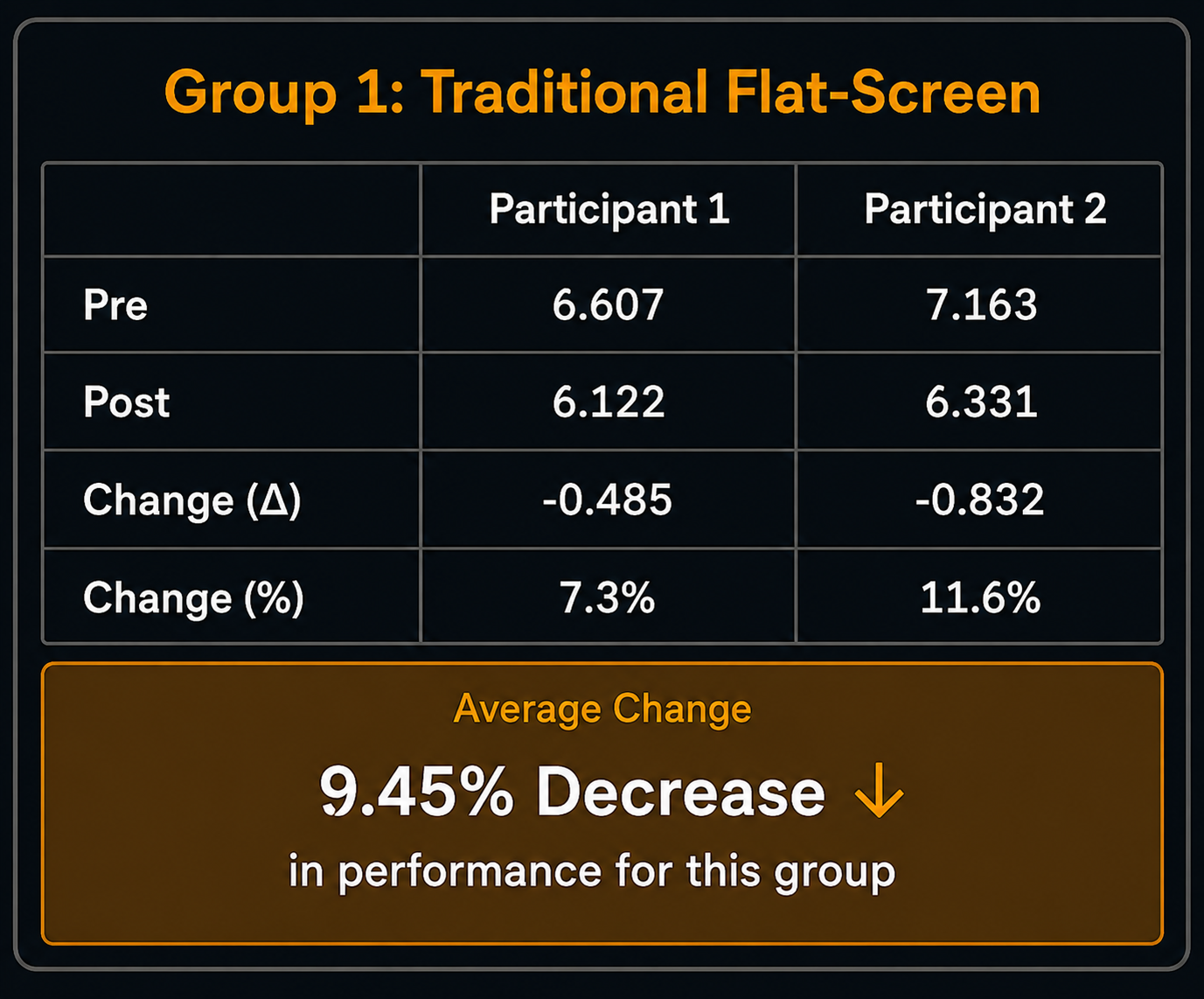
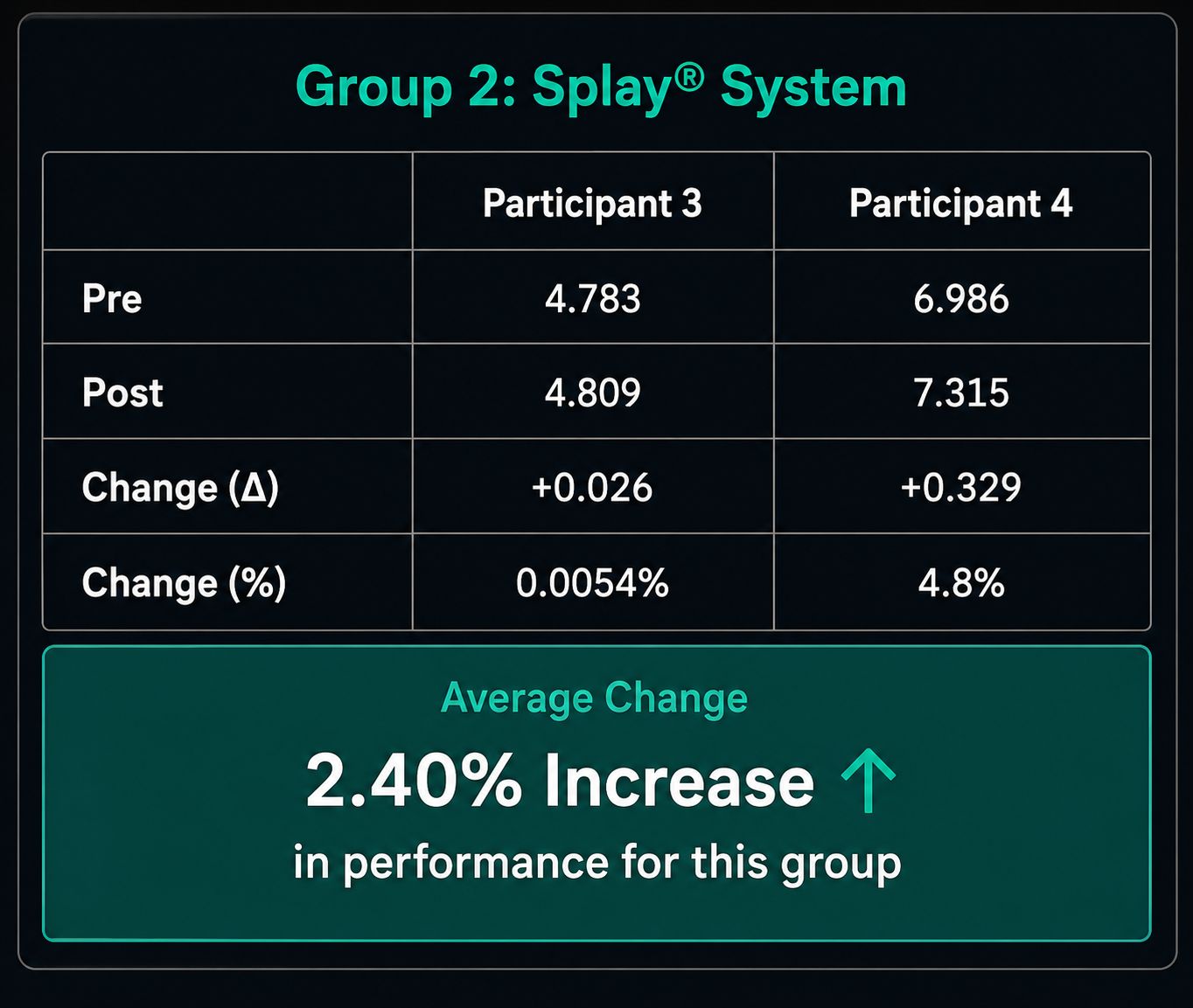
━ INTERPRETATION
What These Results Mean
Measures That Matter
The Warrior Score assesses ocular-motor performance, visual-cognitive performance, and speed of processing. The report groups these measurements broadly as visual-cognitive assessments.
Traditional Screens
The traditional computer-screen group showed a decrease in Warrior Score after the screen-time challenge, indicating visual-cognitive fatigue following more than two hours of screen use.
Splay® Performance
The Splay® group showed no discernible decrease in Warrior Score performance. Both participants instead demonstrated slight improvements.
Why It Matters
Better maintainence of visual-cognitive performance cna help improve productivity, worker retention health and overall wellness.
“These data support a hypothesis that screen time decrement in visual-cognitive performance seen with people who work on traditional computer screens may be mitigated by using the Splay® system.”
━ PARTICIPANT RESULTS
Pre vs. Post Comparison
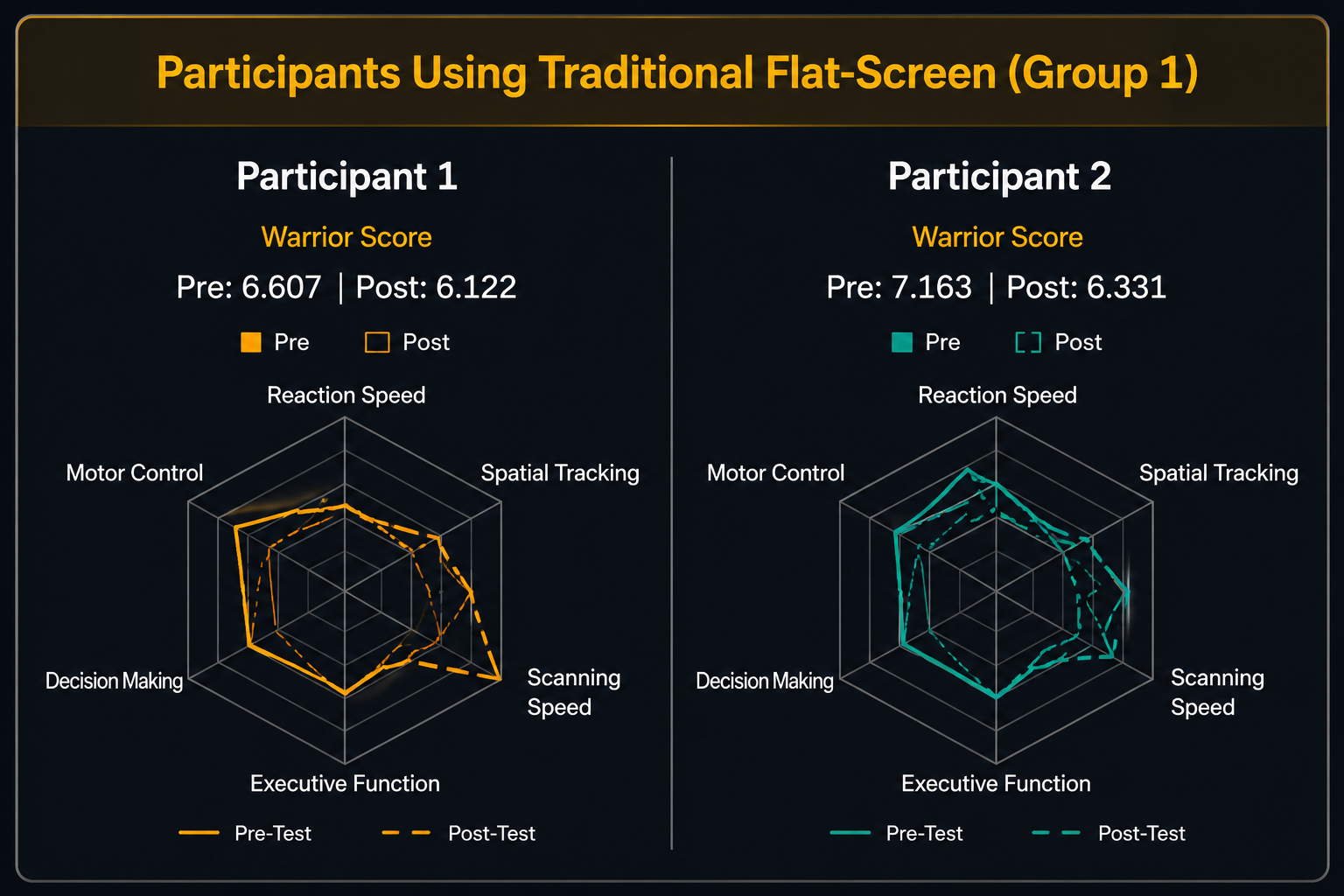
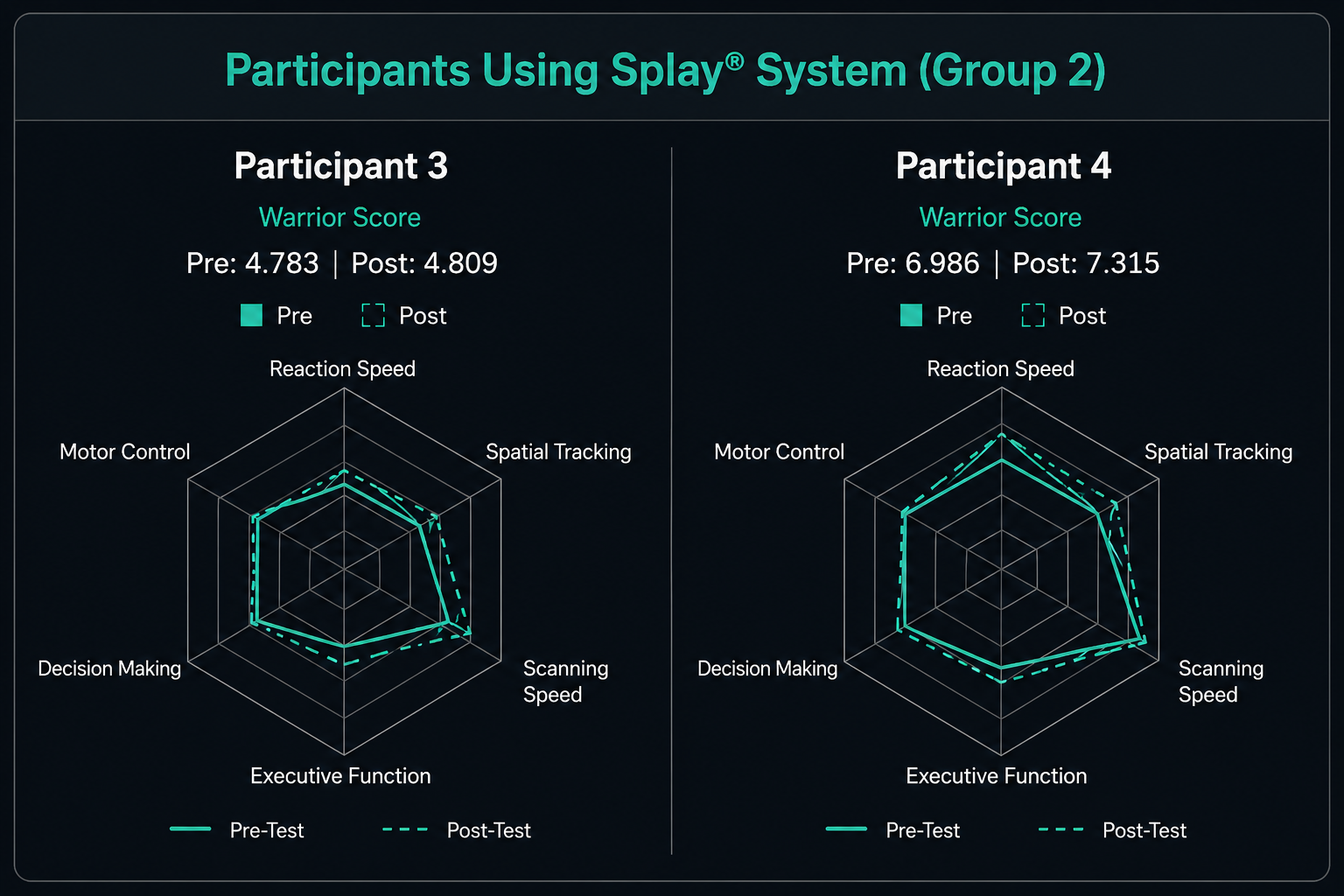
The detailed test results show declines across several measures including RRGL, scanning, near/far, Stroop assessments, memory, and Hercules assessments.
━ APPENDIX
Tests Included in the Warrior Score
A*
Lightboard
Reaction Test
Reaction-based visual performance assessment
Red-Right, Green-Left
Visual response and coordination assessment
Hart Charts
1-page reading 2-page scanning 2-page near/far
Stroop
- Stroop 1 - Stroop 2 - Stroop 3
Hercules
- SOAP - Scanning
STUDY SUMMARY
In this four-participant study, extended use of a traditional flat-screen display was followed by an average decline in Warrior Score performance, while the Splay® group maintained performance and showed a slight average improvement.

Clark NeuroVisual Institute
Independant Research June 21, 2026